


MobileMonkey was a chatbot platform for Facebook Messenger, Instagram and SMS, and I reviewed it on this page for years.
But MobileMonkey doesn’t exist under that name anymore, and it’s no longer a chatbot tool. The company renamed itself Customers.ai, and if you try to sign up for MobileMonkey today, you land on a Customers.ai page instead.
So below, I explain what happened to MobileMonkey, what Customers.ai does today, and which platform to use instead, depending on what you used MobileMonkey for.
Our Verdict
MobileMonkey is discontinued as a chatbot platform. The company renamed itself Customers.ai in 2023, and today it sells website visitor identification for eCommerce brands, not chatbots.
So if you used MobileMonkey for Instagram, Messenger or SMS automation, you need a different tool. For most people that’s Manychat on Instagram and Messenger, or UChat when you want SMS, WhatsApp and one inbox for every channel.
What Happened to MobileMonkey?
Larry Kim, who also founded WordStream, started MobileMonkey as a chatbot platform for Facebook Messenger. Instagram and SMS came later. Businesses used it to reply to comments automatically and to send broadcasts and drip campaigns.
In March 2023, the company renamed itself Customers.ai and moved from chatbots to sales outreach automation.
Larry Kim explained why in that announcement. Meta decided which features MobileMonkey could offer, and it could remove popular features at any time. That capped how much the company could build on top of Messenger, so it switched to a product it controls itself.
A month later, in April 2023, Customers.ai raised a $4.99 million Series A to grow that new product.
What Customers.ai Does Today
Customers.ai isn’t a chatbot platform. It helps eCommerce brands find out who visits their website, so they can email and retarget those visitors.
Here’s what it does:
- It identifies anonymous visitors on your website and finds their email addresses
- It recognizes the same shopper on their phone and their laptop, and across different browsers
- It sends those contacts to Klaviyo for your email campaigns, and builds retargeting audiences for Meta Ads and Google Ads
- Its AI agent, Alfred, sorts your contacts into groups based on how likely they are to buy
It’s built for Shopify stores that send their emails with Klaviyo. The one thing left from the MobileMonkey days is InstaChamp, the old Instagram autoresponder, which Customers.ai still links to in its menu. But its homepage, product and pricing are all about visitor identification now.
So Customers.ai doesn’t compete with the tools a former MobileMonkey user would look at. If you want to automate conversations on Instagram, Messenger or WhatsApp, you need a different platform.
Customers.ai’s price depends on how many profiles you have in Klaviyo, unsubscribed ones included, and the shortest contract is three months. With 1,000 Klaviyo profiles on a three-month contract, all three products cost $626/month. A six- or twelve-month contract is a little cheaper.
You can also leave products out to pay less. Without the X-Ray identity engine, it’s $312/month. Drop the Alfred AI audience agent as well, and you pay $156/month for Super CAPI, its server-side tracking for Meta Ads. But X-Ray is the visitor identification itself, so without it you lose most of what Customers.ai is for.
What People Used MobileMonkey For
Most people used MobileMonkey for one of four things. Find yours, because the first four alternatives below follow the same use cases, in the same order:
- Instagram DM automation: replying automatically when someone commented on a post or replied to a story
- Facebook Messenger marketing: sending a DM to everyone who commented on a post, plus broadcasts and drip sequences
- SMS marketing: texting contacts alongside Messenger and Instagram
- One inbox for every channel: answering Messenger, Instagram and SMS conversations in one place, with a human taking over from the bot
The Best MobileMonkey Alternatives by Use Case
I’ve tested each of these platforms myself. Each one replaces a different part of MobileMonkey, so pick the one that matches what you used it for.
Here’s what to use for each one:
- Instagram DMs and comment automation: Manychat
- Facebook Messenger marketing: Manychat or UChat
- SMS: Manychat or UChat
- Multiple channels at once: UChat
- AI that answers questions: Chatbase
- Live chat on your website: Tidio
If you used MobileMonkey for Instagram DMs and comment automation: Manychat
Manychat is the closest replacement for what MobileMonkey did on Instagram. When someone comments a keyword on your post or replies to your story, Manychat sends them a DM automatically:

You can also start flows with keywords in DMs, and send broadcasts and sequences.
It’s the best fit for creators, coaches and small businesses that get their leads from Instagram. Manychat AI can also answer DMs from your own business info, but only on Instagram and on a paid plan with Manychat AI.
You can read more in my Manychat review.
If you used MobileMonkey for Facebook Messenger marketing: Manychat or UChat
On Messenger, Manychat does what it does on Instagram: it replies to comments with a DM and sends sequences and broadcasts:

If Messenger is your main channel, it’s the easiest tool to switch to.
But in Manychat, you build separate flows for every channel. UChat is the better pick if you want the same bot on Messenger, WhatsApp, Telegram and your website, because you build one flow and publish it everywhere.
I cover it in detail in my UChat review.
If you used MobileMonkey for SMS: Manychat or UChat
Both platforms can text your contacts. In Manychat, you connect a Twilio account, which sends the text messages and charges you for them on top of your Manychat plan:

UChat has SMS as one of its channels too, so the same bot can text people and talk to them on Messenger and Instagram.
If you used MobileMonkey across multiple channels at once: UChat
UChat is the closest match to MobileMonkey’s multi-channel setup. You build one bot and publish it on more than 15 channels, including Messenger, Instagram, WhatsApp, Telegram, SMS and your website. It also comes with broadcasts, sequences and a built-in live chat.
That live chat replaces MobileMonkey’s inbox. You see the conversations from every channel in one place, and someone on your team can take over from the bot at any moment:

And unlike MobileMonkey, UChat works on WhatsApp. You can send WhatsApp message templates, and even let customers browse and order your products right inside the chat.
The downside is that UChat has a lot of options, so it can feel overwhelming at the start.
If you want AI answering questions rather than rule-based flows: Chatbase
Chatbase works differently from MobileMonkey. Instead of building flows, you give it your website and documents:
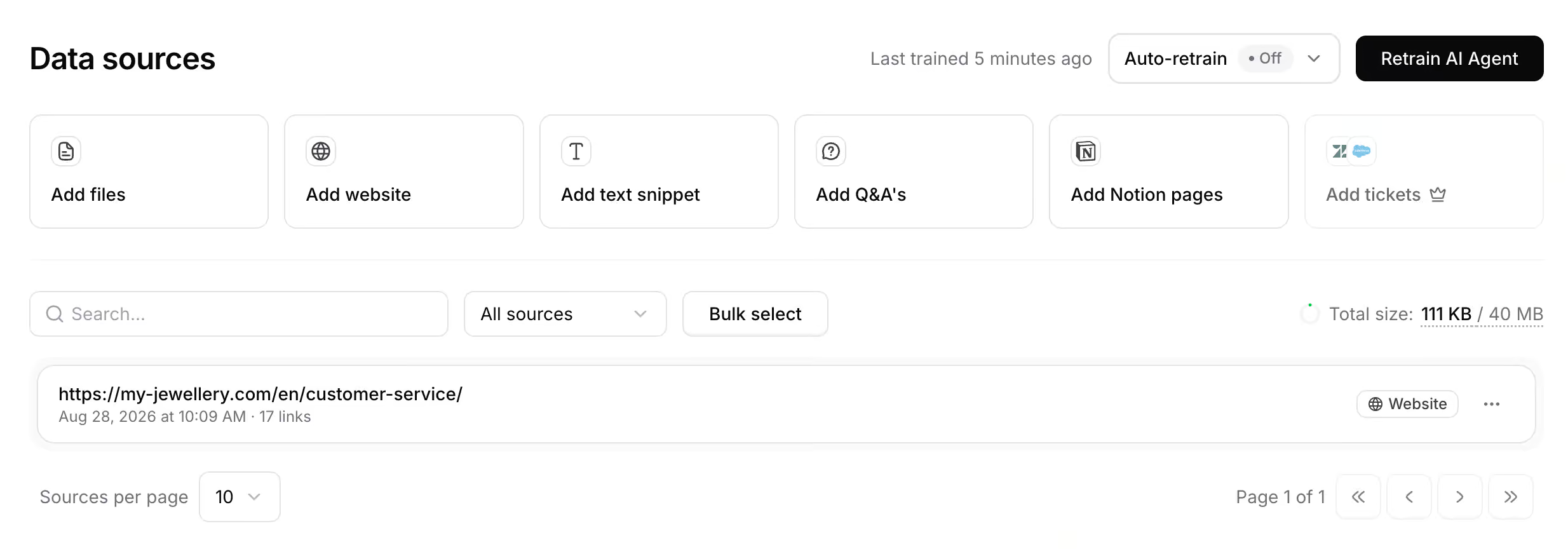
It trains an AI agent on them, and that agent answers your customers’ questions automatically. It’s not what MobileMonkey did, but if most of your MobileMonkey messages answered the same questions, an AI agent handles those without a flow for each one.
It can also do things for your customers with AI actions, like checking an order’s status or booking a call. But Chatbase can’t send marketing messages on Instagram or Messenger, so it won’t replace MobileMonkey’s broadcasts and comment automation.
Read my Chatbase review to see how it works.
If you need live chat and support automation on your website: Tidio
Tidio combines chatbot flows, live chat and its Lyro AI agent in one tool for your website. Lyro answers common questions, and your team takes over in the live chat when a customer needs a human:
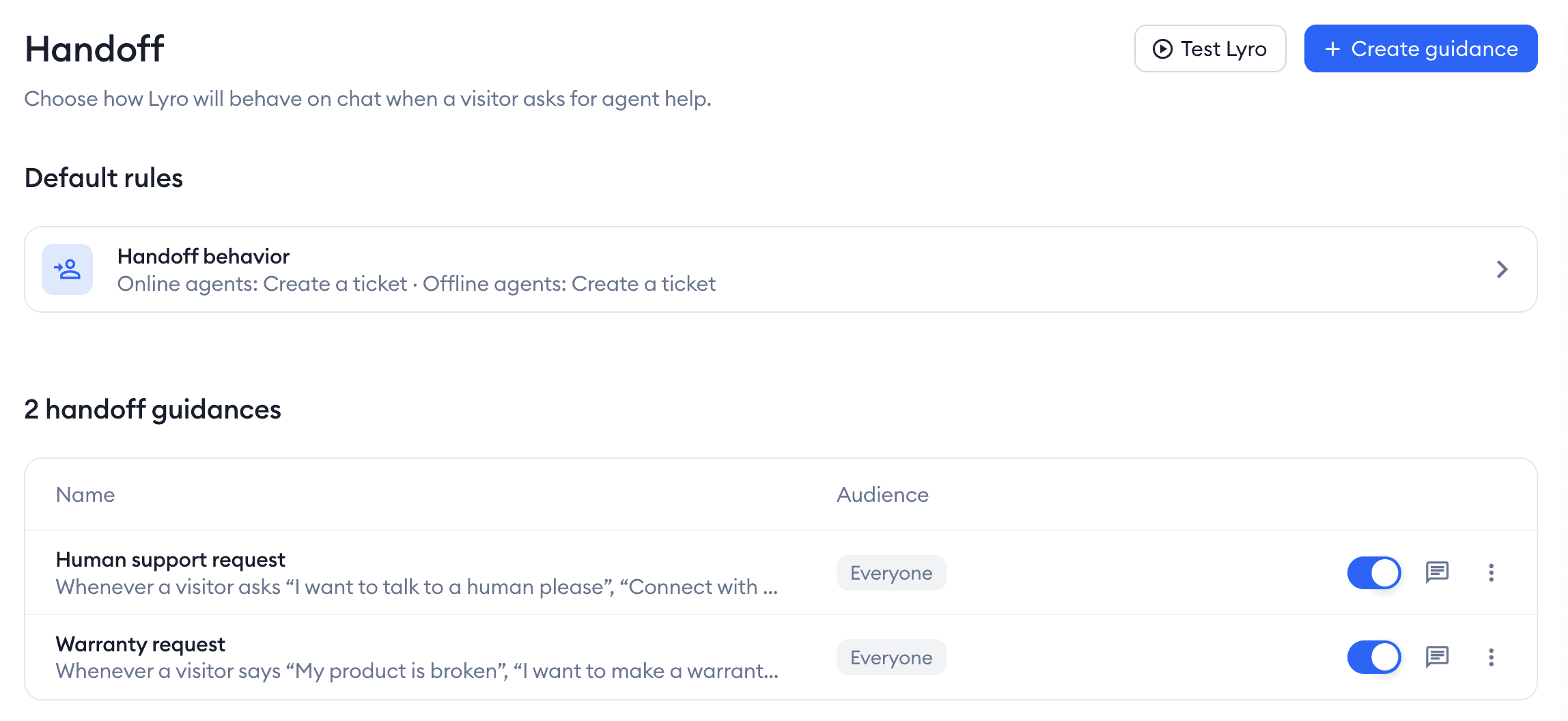
It’s a great fit for small and medium businesses, especially Shopify stores. But Tidio can’t send broadcasts or reply to comments with a DM on Facebook, Instagram or WhatsApp, so it won’t replace MobileMonkey’s Messenger campaigns.
You’ll find the details in my Tidio review.
Want to compare more options? Have a look at my list of the best chatbot platforms.
Frequently Asked Questions
What happened to my MobileMonkey account?
That depends on your plan. Customers.ai’s help center says legacy MobileMonkey subscriptions, the ones created on or before July 11, 2019, keep their price and features for as long as you want. But that article still uses the MobileMonkey name, so if you have an old account, contact Customers.ai directly to confirm its current status.
Is Customers.ai the same as MobileMonkey?
Same company, different product. Customers.ai identifies the anonymous visitors on eCommerce websites and turns them into email contacts and ad audiences. It’s not a chatbot platform.
Why did MobileMonkey stop being a chatbot platform?
Because the whole product depended on Meta. Larry Kim wrote that Meta set the rules for what MobileMonkey could do on Messenger and could switch popular features off whenever it wanted, so the company rebuilt itself around sales outreach automation.

This blog about MobileMonkey has helped me a lot.
Thank you Lilliana! 🙂