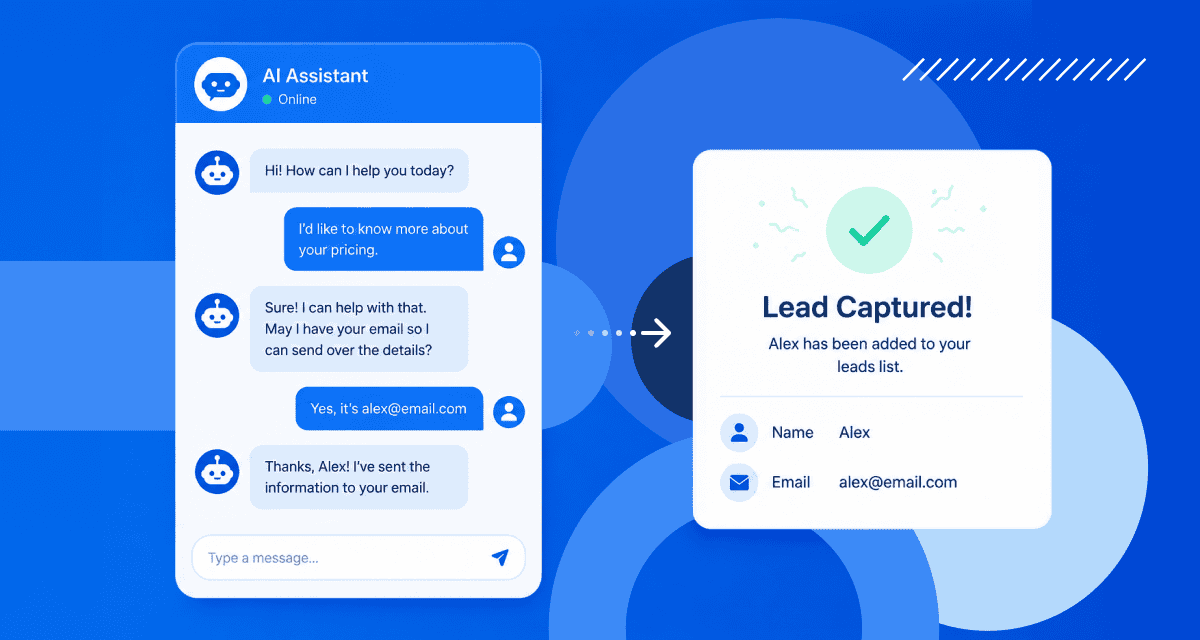
If you’ve ever typed “Where’s my order?” and gotten a clear answer in seconds, you’ve already interacted with chatbot automation.
Research shows that almost 70% of customers prefer chatbots, since they get an answer immediately. And my own experience of testing 200+ platforms and building chatbots for over 6 years confirms it.
In this guide, you’ll learn:
- What chatbot automation is
- The benefits of chatbot automation
- Examples of automated chatbots in different industries
- Best chatbot platforms to use in 2026
Let’s get started!
What Is Chatbot Automation?
Chatbot automation is software that chats with people through text or voice. It can understand what they’re asking and complete tasks without human involvement.
That can include:
- Answering questions
- Collecting customer details
- Booking appointments
- Routing support tickets
- Updating systems like a CRM or help desk
Some bots are rule-based (if someone says X, respond with Y). Others use AI to interpret intent, which fundamentally changes how chatbots work.
They can understand what the person means, not just recognize specific words. Then, they decide what to do next.
Chatbot Automation vs. Live Chat
Live chat means a real person is typing responses in real time. Chatbot automation is the system handling the conversation. In some cases, it can later hand off the conversation to a human agent.
Each has a clear role:
- Live chat works best for complex issues, emotional situations, and edge cases
- Chatbot automation works best for high-volume questions, fast routing, and repeatable workflows
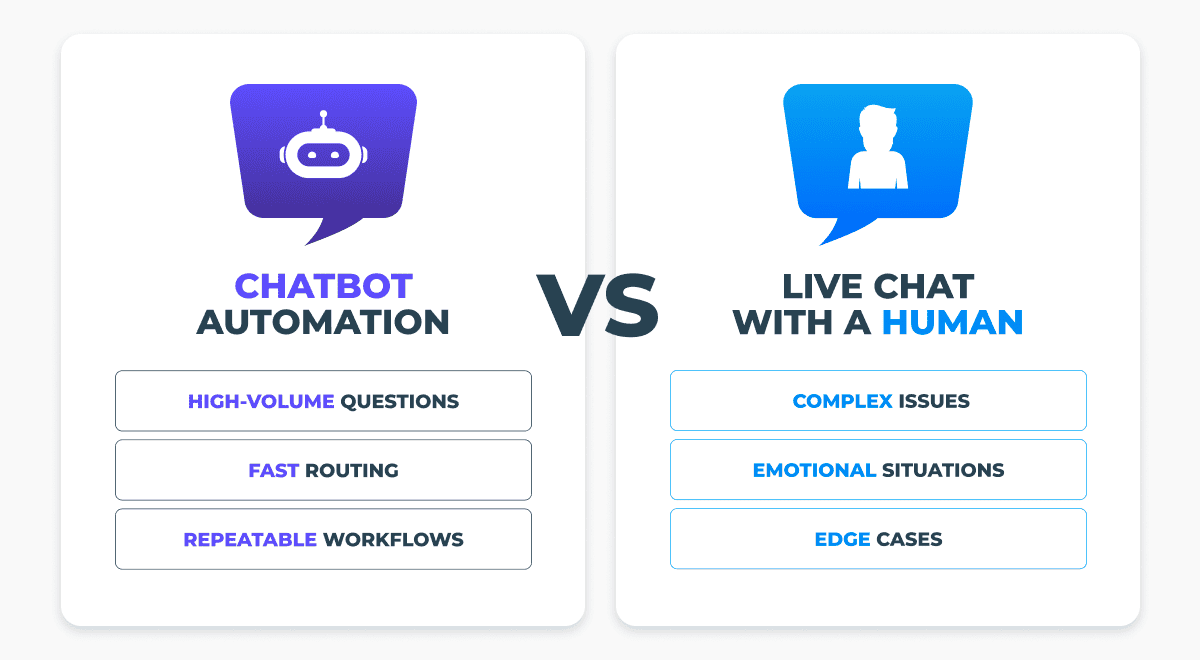
The best setups usually combine both. The bot handles the first 70-90% of common requests, then hands off to a human with context when needed.
Read more: Tidio vs Intercom – a breakdown of the leading live chat and chatbot platforms side by side.
What Are the Benefits of Automated Chatbots?
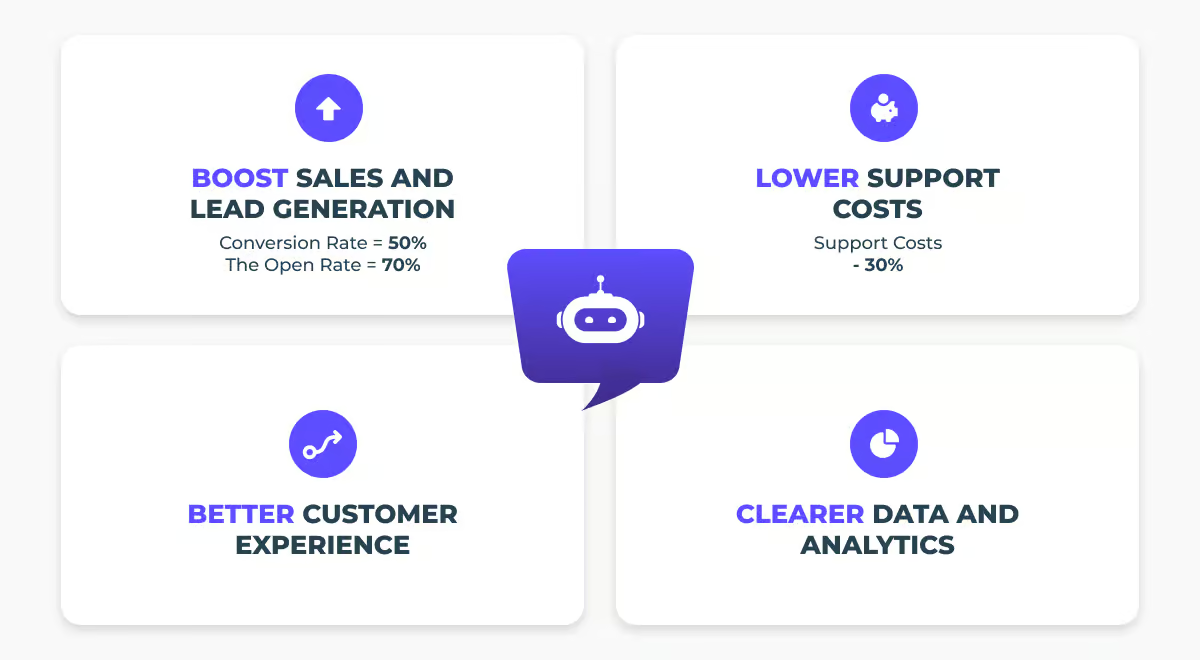
Here are the four biggest benefits of using automated chatbots:
- Boost sales and lead generation
- Lower support costs
- Better customer experience
- Clearer data and analytics
Let’s break each one down.
Boost Sales and Lead Generation
Chatbots help businesses increase sales and improve lead generation.
Many businesses still rely on traditional channels to capture leads, such as email or landing pages.
But landing pages’ conversion rate is at only around 6%. And emails are opened roughly 20% of the time, with a click rate about 4%.
On the other hand, chatbots’ conversion rate is about 50%. The open rate is around 70%, and click rate is at roughly 40%.
That’s because automated chatbots respond instantly, 24/7. They can quickly:
- Answer pricing questions
- Explain features
- Recommend products
- Route high-intent visitors to sales
That removes friction in the buying process and increases the chances that a lead becomes a customer.
Lower Support Costs
Chatbot automation reduces support costs by 30%, according to research. Chatbots handle high-volume, repetitive questions automatically.
You don’t have to pay agents to answer the same questions all day, such as order status, password resets, or return policies. Instead, a chatbot handles those requests instantly.
That means fewer tickets, shorter queues, and less pressure to hire as volume grows. It cuts costs and provides faster responses for customers.
That’s why chatbots for small businesses have become one of the most practical investments a lean team can make.
Better Customer Experience
Chatbot automation makes customer experience much better. It delivers consistent, accurate responses across various channels. Everyone gets the same information, and immediately.
On the other hand, human agents can give different answers, and take longer to respond. Automated chatbots fix that issue.
This creates a smoother, more predictable experience without requiring a massive support team.
Clearer Data and Analytics
You can get better analytics with chatbots.
Every automated chatbot interaction generates structured data. They collect:
- What people ask
- What they click
- Where they often get stuck
- What actions they take
That data helps teams identify common objections, friction, and patterns in buying behavior. Over time, it improves marketing, sales, and support decisions.
How Chatbot Automation Is Applied Across Different Industries
Chatbot automation works best when it helps people get what they want faster. That’s how businesses achieve benefits described in the previous section.
Below, I’ll go over common ways businesses apply chatbot automation across different industries.
E-commerce: Order Support and Buying Confidence
E-commerce chatbots are most effective after someone has made a purchase. They’re also effective when someone’s close to making a decision.
Common applications include:
- Looking for order status (“Where’s my order?”)
- Returns and exchange instructions
- Product guidance (size, fit, compatibility, use case)
- Back-in-stock and price-drop alerts via opt-in messaging
The biggest benefits come from connecting the chatbot to order data or guiding users to the next step. If the bot can’t access order details, it should say so and offer a fast handoff to support.
SaaS: Onboarding, Support Triage, and Lead Routing
For SaaS companies, chatbot automation often lives on high-intent pages and inside the product itself.
Strong applications include:
- Trial welcome messages with clear next steps
- Feature setup guidance linked to docs or videos
- Pricing-page qualification and sales routing
- Support ticket creation with context captured upfront
The most effective setups combine automation with human handoff. The chatbot gathers details, then a human joins the conversation already informed.
It reduces back-and-forth and speeds up resolution.
Healthcare and Wellness: Scheduling and Basic Intake
In healthcare and wellness, chatbot automation works best for administrative tasks. It’s not good for diagnosis or sensitive decision-making.
Typical applications include:
- Appointment scheduling and rescheduling
- Hours, location, and insurance FAQs
- Basic intake questions (when appropriate)
- Appointment reminders and follow-ups
These conversations can involve sensitive information. So, bots should hand off complex or personal issues to staff.
When used carefully, automation reduces phone volume without hurting trust.
Banking and Insurance: FAQs, Routing, and Status Updates
Financial services often use chatbots as a first line of assistance. They help customers get answers or reach the right department quickly.
Common applications include:
- Account and policy FAQs
- Claim or application status checks (when integrated)
- Branch, ATM, and contact information
- Routing to specialized teams
The tone is very important here. A chatbot should feel like a helpful receptionist, not a barrier.
Anything involving disputes, frustration, or trust repair should move to a human quickly.
Education and Training: Enrollment Guidance and Student Support
Schools, bootcamps, and course creators use chatbots to make enrollment easier. They also provide better ongoing support.
Effective applications include:
- Program or course matching based on goals
- Enrollment steps and deadline reminders
- Tuition, pricing, and payment plan FAQs
- Routing students to technical or access support
These conversations often involve uncertainty. So clarity and reassurance matter more than speed.
A friendly, straightforward bot can reduce confusion and support better decisions.
Where Chatbot Automation Falls Short
Chatbot automation is great, but it’s not a good fit for every situation. That’s why it’s important to understand chatbot pros and cons.
Bots work best with simple, repeatable tasks. They struggle when a problem is emotional, complex, or unusual. In those cases, people want to talk to a real human.
Essentially, chatbots fall short with anything that needs careful judgment.
The solution is to use chatbots as a first step, not the final one. Let the bot handle simple questions, then hand the chat to a human when things get complicated.
That balance keeps chatbot automation helpful instead of annoying.
Best Automated Chatbot Examples
There is no single “best” chatbot for everyone and everyone. The right choice depends on what you want from your chatbot.
Below are some of the best chatbot platform tools and what they’re best used for:
- Manychat (best for marketing automation on social media)
- Intercom (best for omnichannel support bots for enterprise)
- Freshchat (best for AI agents with large customer support teams)
- Tidio (best for website chatbots for small and medium businesses)
Let’s go over them one by one.
Manychat
Manychat is a chatbot platform focused on marketing automation for Instagram, Facebook Messenger, and WhatsApp.
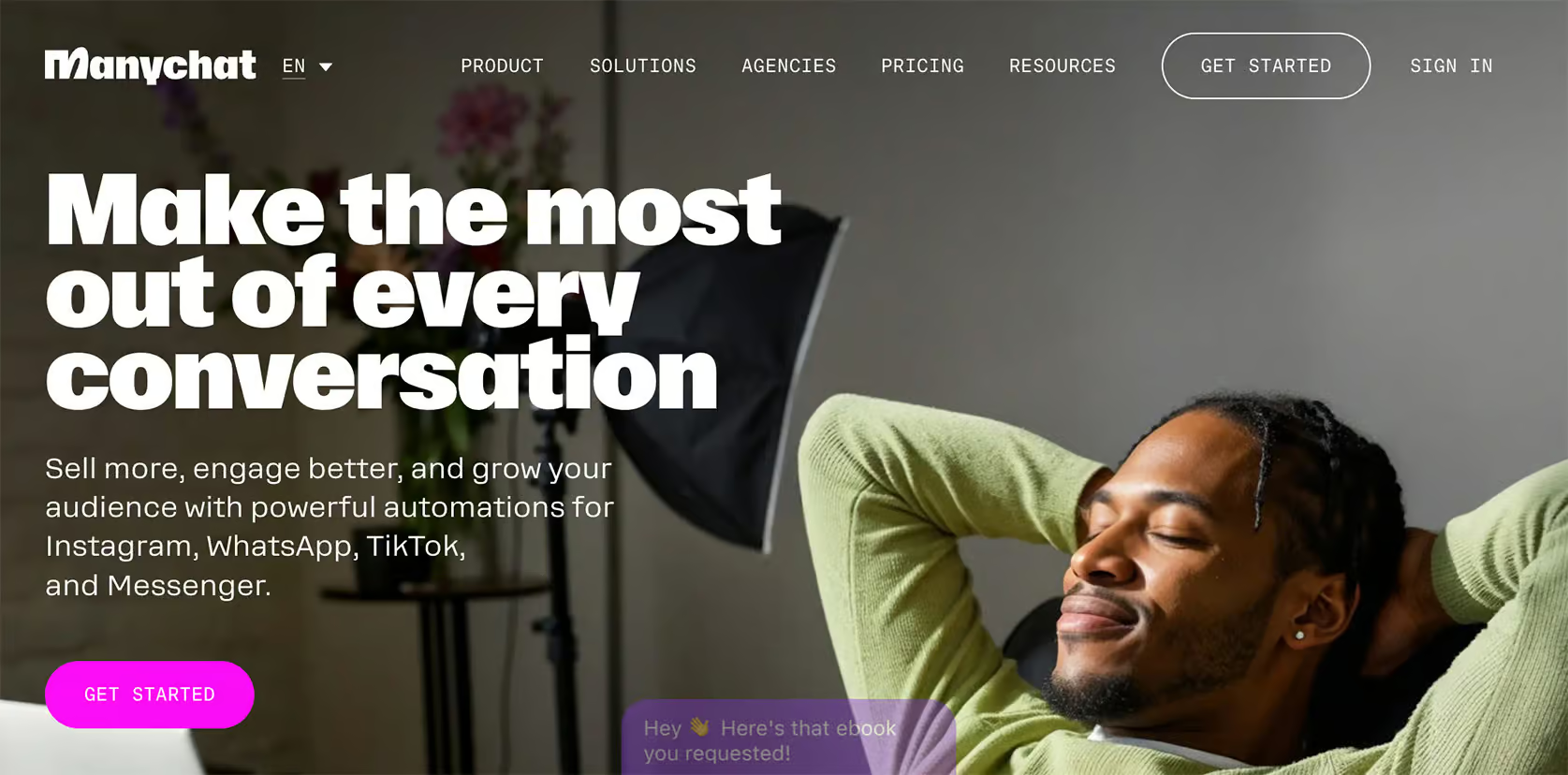
Best for: Social media marketing automation and lead generation
Key strength: ManyChat is extremely easy to use and makes it simple to build automated messaging funnels
Limitation: You need separate workflows for each channel
If you want to try Manychat, click the button below to get 1 month of Manychat Pro for free (discount code appears) 👇
Chatbase
Chatbase is an AI chatbot platform that lets you train bots using your website content or documents.
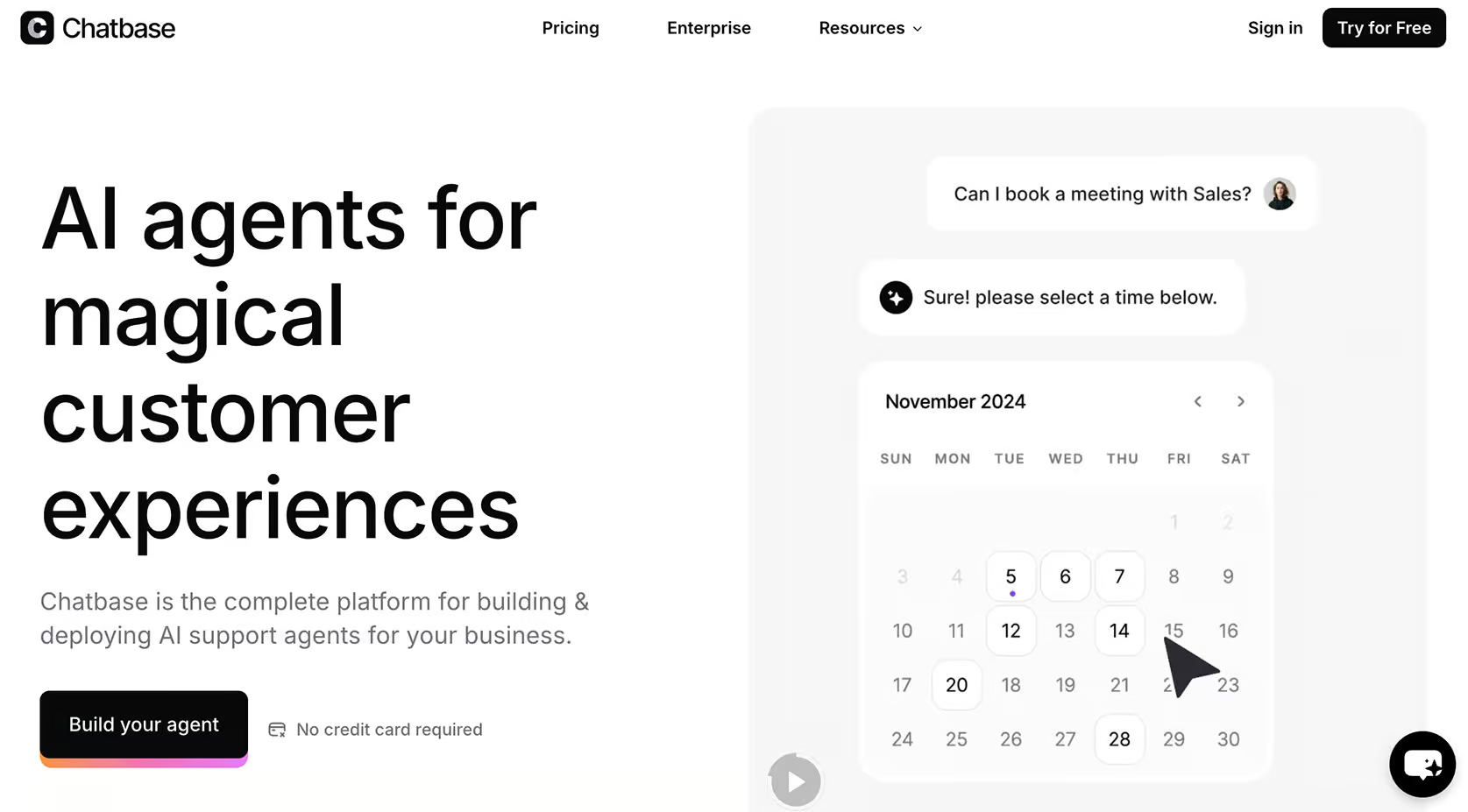
Best for: Creating AI-powered support chatbots quickly without technical setup
Key strength: You can launch an AI chatbot in minutes by training it on your data
Limitation: Limited customization beyond basic Q&A, mostly suited for quick, simple AI setups
Freshchat
Freshchat is a customer support platform with built-in AI agents.

Best for: Large customer support teams that need AI agents
Key strength: Freshchat combines AI agents, human handoff, and omnichannel support in one platform
Limitation: It can be expensive for small businesses, not great for marketing
Tidio
Tidio is a live chat and chatbot platform designed for small and medium businesses.

Best for: All-in-one website chatbots for small to medium businesses
Key strength: Tidio is beginner-friendly and makes it easy to combine AI chatbots with live chat on your website
Limitation: No marketing features on Instagram, Facebook and WhatsApp
Click the button below to get 20% off on all Tidio plans 👇
Your Next Step
And that’s it! Now you understand chatbot automation and its benefits.
Not everyone wants the same from their chatbot. Some want to automate customer support, some want to generate leads, others want to run marketing campaigns.
Whatever your goal, the next step is the same — to build your first chatbot. It’s actually very easy to do. I have a tutorial on how you can do this in just 3 simple steps.
Click the link below to learn how:
How To Create AI Chatbot in Less Than 10 Minutes
Frequently Asked Questions
How do I know which chatbot automation is right for my business?
It depends on two things:
- Where your customers already are (what channel)
- What task you need to automate first
Start with the highest-volume repetitive task your team handles manually, and automate that with a chatbot. Then, slowly expand on what the chatbot can do.
Can chatbot automation work on WhatsApp and Instagram?
Absolutely! There are many platforms that are great for building chatbots for Instagram and WhatsApp. Some examples include Manychat, Chatbase and UChat.
What is the difference between chatbot automation and AI agents?
Chatbot automation follows predefined rules and workflows. It’s designed to handle repetitive tasks like answering common questions, booking appointments, or routing support requests.
AI agents go a step further. They can understand context, make decisions, and adapt to new situations. They can complete multi-step tasks with minimal human input.